

Mini Starts
A FEW THINGS TO GET YOU GOING. DESIGNED TO BE USEFUL.

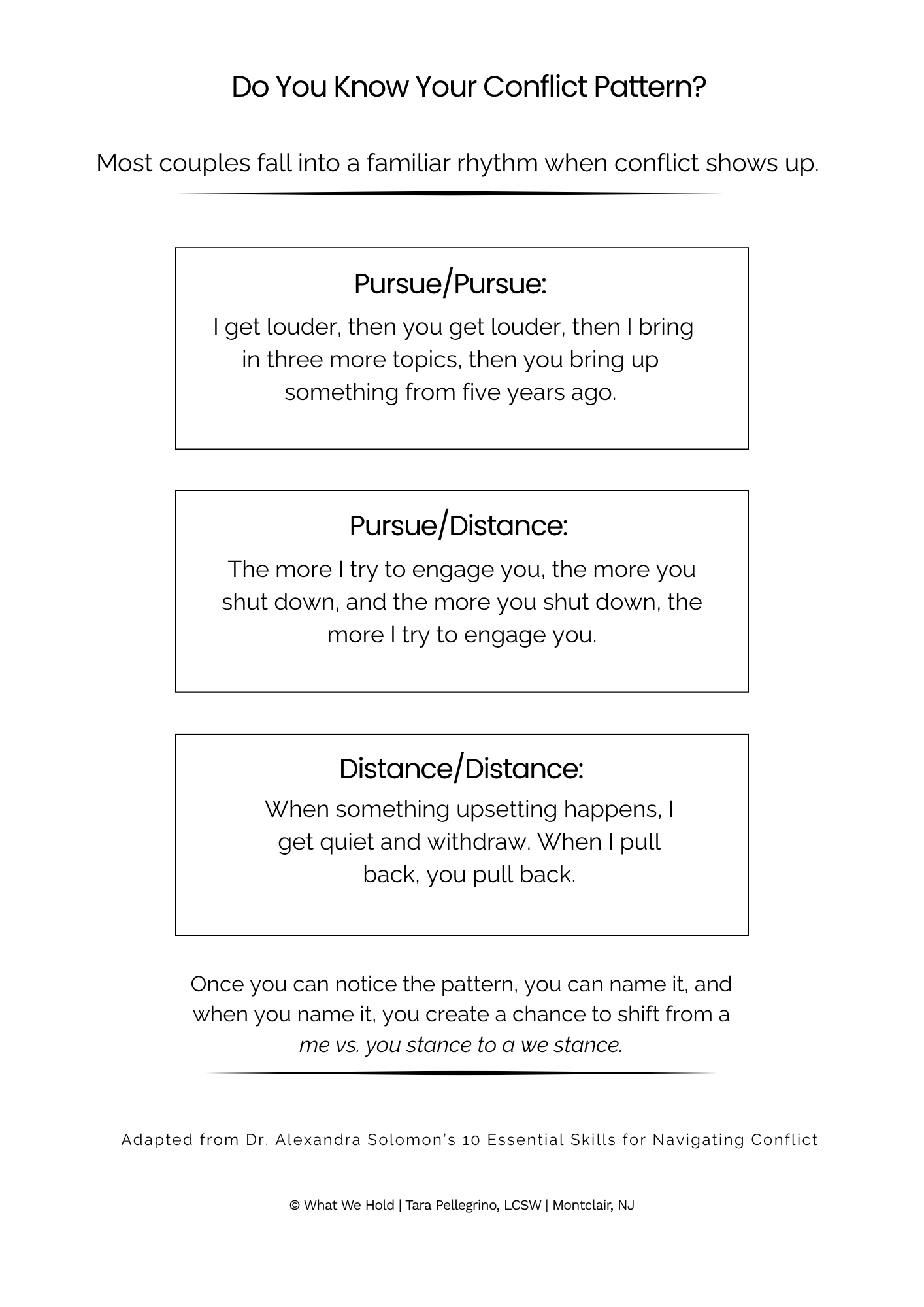
Notice it. Name it. What’s your conflict pattern?
We might recognize ourselves in each of these patterns, but one usually feels most familiar.
The shift happens when you notice where you tend to go in a conflict and then naming it:
“Oh, we’re doing that pursue/distance thing again where I push to talk and you pull away.”
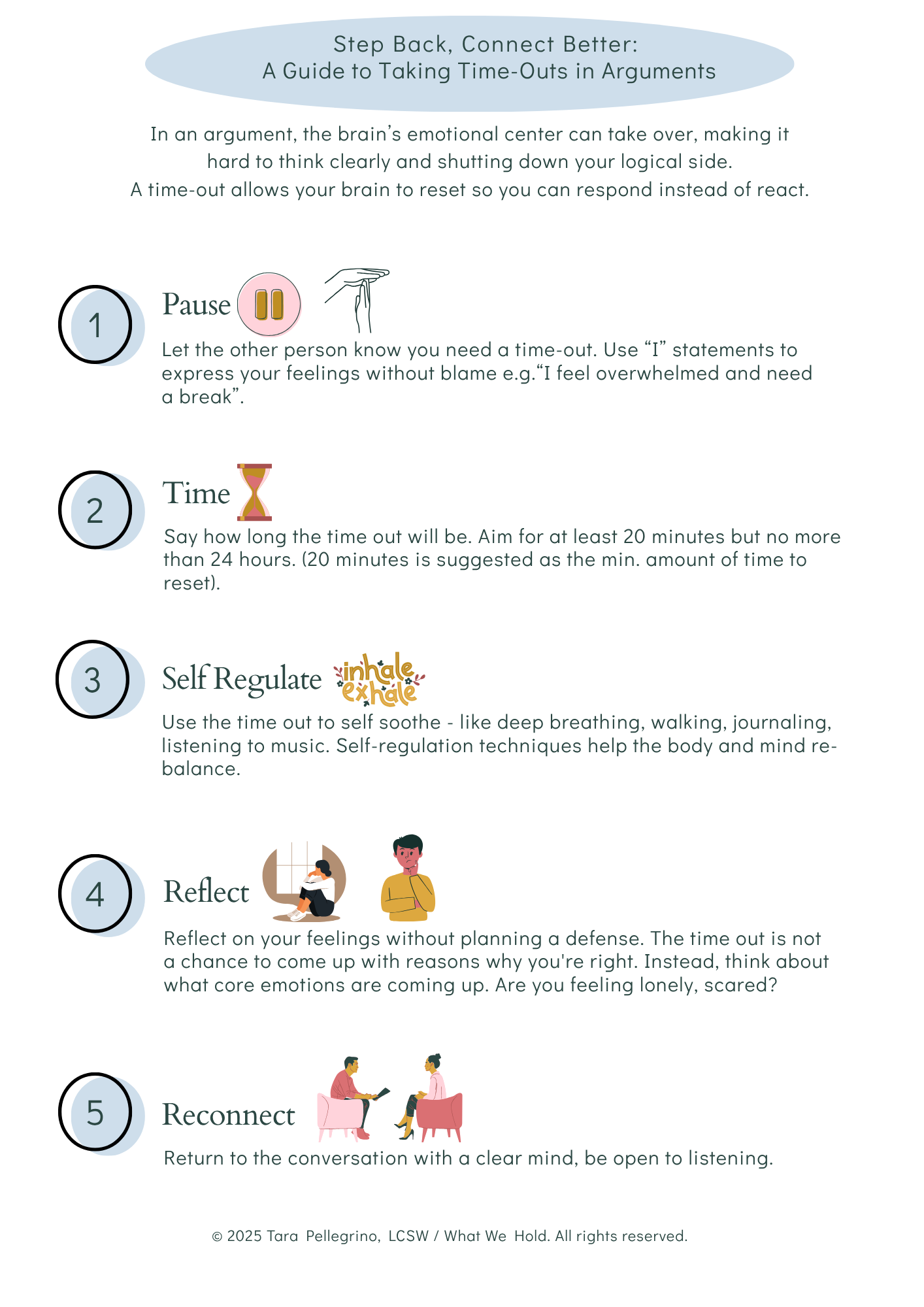
Time out, not shut out.
Think of this as a “pause button,” not an eject button. A time-out gives you both room to reset so you can actually hear each other again. Learn more here
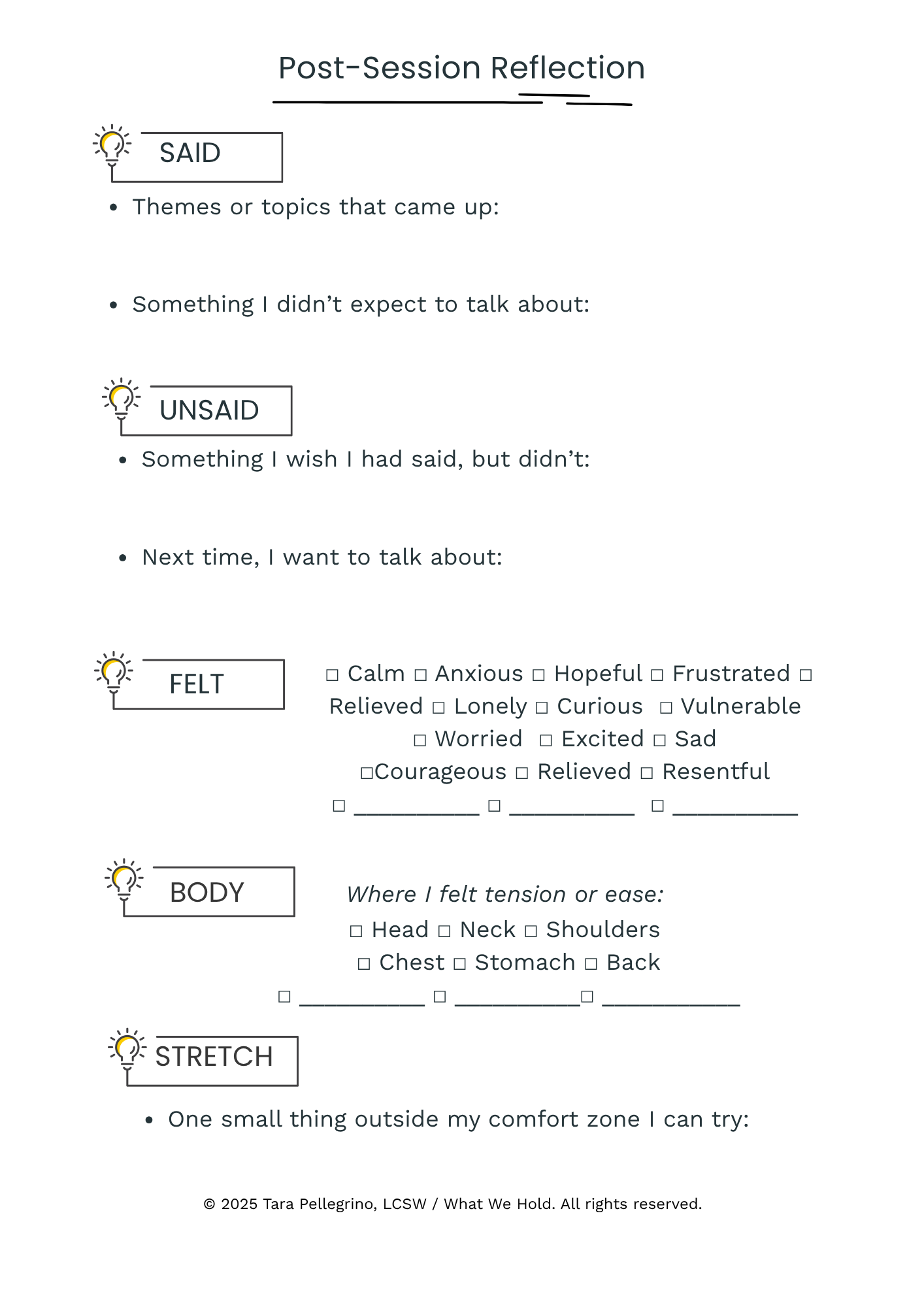
Post-Session Reflection
Therapy doesn’t stop when the session ends. This short reflection is designed to help you stay connected to your therapy work between sessions without requiring long journaling or perfect focus.
It’s especially helpful if you:
Tend to forget insights once you leave session
Feel overwhelmed by unstructured reflection
Have attention or executive functioning challenges
Want a simple way to track patterns over time
The prompts are gentle, structured, and easy to return to. I incorporate this kind of reflective work into my practice because small moments of awareness revisited over time, often lead to the most meaningful change.
In-person clients receive a printed zine for a screen-free, analog way to reflect. You can download and print one at home; it folds into a small booklet if you’re feeling creative.
These resources are for educational and reflective purposes and aren’t a substitute for therapy or crisis support.